Oil markets are no longer reacting solely to headlines—they are responding to the movement of physical barrels.
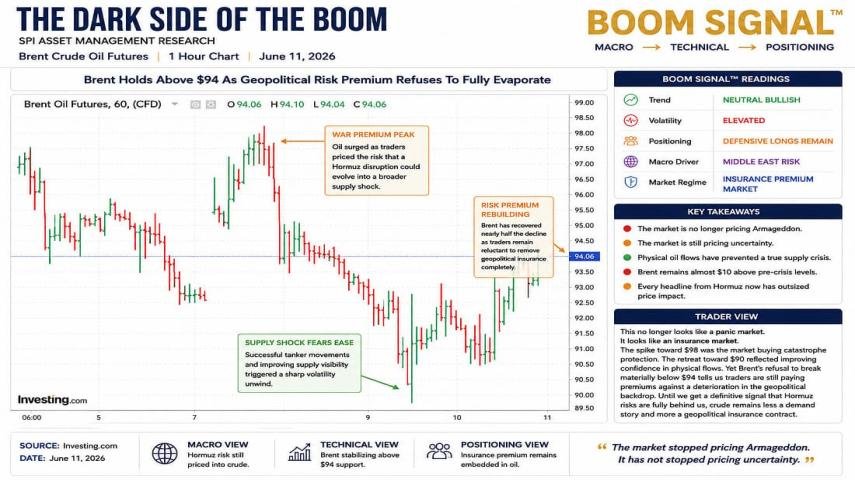
With Brent crude holding near the mid-$90s and WTI trading around the low-$90s, traders are clearly pricing elevated geopolitical risk. However, prices are not signaling a full-scale supply shock. If the Strait of Hormuz were completely closed, crude prices would likely have surged well beyond current levels.
Instead, the market appears to be pricing a scenario where the world's most important energy chokepoint remains impaired—but not entirely blocked.
Tanker Flows Matter More Than Headlines
Recent shipping intelligence suggests that oil continues to move through alternative routes along the Omani coastline. While traffic remains significantly below normal levels, it has not fallen to zero.
This distinction is crucial.
In today's market, the most important indicators include:
-
🚢 Tanker movements and AIS signal gaps
-
📦 Freight and insurance costs
-
📊 Time spreads and refinery margins
-
🌏 Actual crude arrivals into Asia
-
🛢️ Export flows from Iraq, Kuwait, and the UAE
As long as barrels continue reaching end-users, oil prices are likely to reflect an "insurance premium" rather than outright panic.
The Market's Base Case
The prevailing view remains that the current tensions represent a short-lived disruption rather than a prolonged energy crisis.
However, the risks remain asymmetric.
A single missing convoy, an escalation around shipping lanes, or a sudden halt in tanker flows could trigger a sharp repricing higher, as inventories alone may not fully cushion the impact.
Outlook
Oil is trading a delicate balance between resilience and fear.
For now, the market believes that supply routes remain damaged—but functional. As long as crude continues flowing through the region, Brent and WTI may remain supported without entering full panic mode.
But if those flows stop, even temporarily, the next move in oil prices could be swift and violent.