
17 Jun 2026
Oil Refuses to Calm Down as Geopolitical Risks and Demand Concerns Collide
Oil Refuses to Calm Down as Geopolitical Risks and Demand Concerns Collide
Oil markets remain highly volatile as traders continue to weigh geopolitical risks against signs of weakening global demand. While recent diplomatic progress involving Iran has eased some fears surrounding the Strait of Hormuz, crude oil continues to react sharply to every new development.
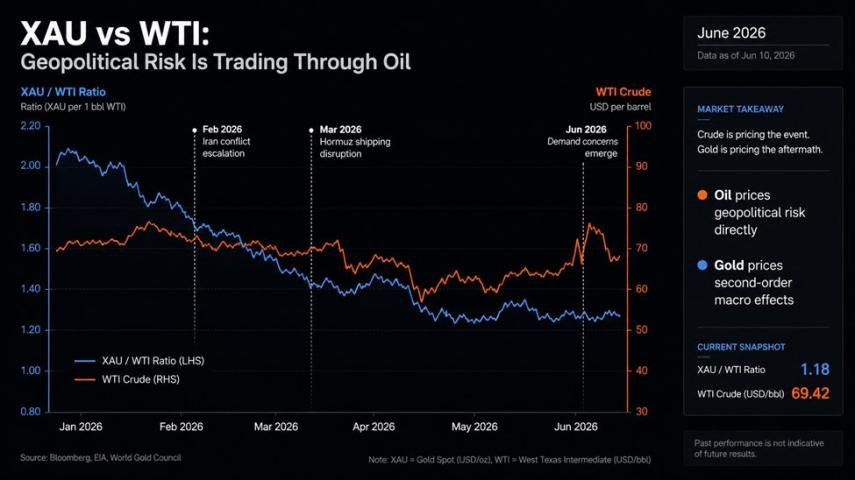
Unlike Gold, which reacts more gradually through inflation and monetary policy expectations, oil remains directly exposed to disruptions in global energy flows.
Why Oil Is Reacting More Than Gold
The Strait of Hormuz remains one of the world's most critical energy chokepoints, responsible for transporting roughly one-fifth of global petroleum consumption.
Any threat to shipping through the region immediately affects:
🛢 Oil supply expectations
🚢 Tanker traffic and freight costs
📈 Energy prices
🏭 Refinery operations
This direct connection explains why oil has become the market's preferred instrument for expressing geopolitical risk.
Demand Outlook Creates Uncertainty
While geopolitical tensions support oil prices, demand concerns continue to limit bullish momentum.
According to recent projections from the Energy Information Administration (EIA), global oil demand could decline by approximately 1.1 million barrels per day in 2026.
Higher fuel costs, slowing economic activity, and policy responses are beginning to impact consumption patterns worldwide.
This creates a difficult environment for oil traders:
📈 Supply risks push prices higher.
📉 Weak demand pressures prices lower.
The result is increased volatility and uncertainty.
Hormuz Remains the Key Driver
Market participants continue to focus on developments surrounding the Strait of Hormuz.
A short disruption may have limited impact as inventories and alternative logistics routes help absorb temporary shocks.
However, a prolonged disruption could significantly affect:
✈ Aviation fuel
🚚 Transportation costs
🏭 Industrial production
📊 Inflation expectations
This is why oil prices often move before physical supply disruptions fully materialize.
Gold and Oil Are Telling Different Stories
Gold continues to enjoy strong support from central bank purchases and long-term safe-haven demand.
However, Gold is responding primarily to:
💰 Inflation expectations
🏦 Central bank activity
📉 Interest rate outlooks
🌍 Long-term geopolitical uncertainty
Oil, by contrast, is responding directly to the immediate risks surrounding supply and transportation.
Outlook
For now, oil remains caught between geopolitical support and weakening demand fundamentals.
Traders will closely monitor:
✅ Strait of Hormuz traffic
✅ EIA inventory reports
✅ Federal Reserve policy expectations
✅ Middle East developments
Until greater clarity emerges, volatility in the energy market is likely to remain elevated.
Check free signal here 👉 https://cutt.ly/5t9Critr
Latest Posts